Scientific and regulatory work
Support literature research, scientific investigations, technical documentation, and regulatory review activities with attention to evidence and source context.

YouSophia helps federal health agencies—including NIH, FDA, CDC, HHS, and the Military Health System—transform how they work and modernize the systems that support their missions. We connect applied science, data, AI, and technology with the people and processes that turn complex challenges into practical progress.
We bring a thoughtful, multidisciplinary approach to the needs of public-sector teams and the people they serve.
Support research, evidence review, and scientific documentation across health missions.
Help teams curate, analyze, and interpret complex health and study data.
Assess business processes, information flows, and opportunities for better interoperability.
Support training, knowledge sharing, and responsive service for mission teams.
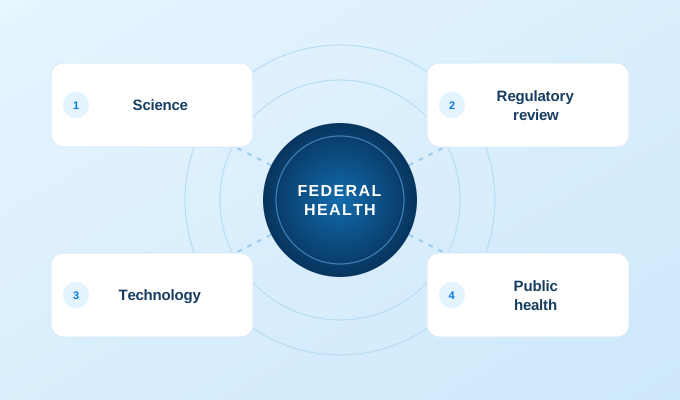
These connected elements help frame the work and the people it is intended to support.
Federal health work spans research, review, data, technology, and public communication. An effective support model connects these disciplines around the needs of agency teams.
Research support, evidence synthesis, and scientific documentation.
Data and knowledge resources that help specialists evaluate complex information.
Architecture and workflow advice to connect tools, systems, and people.
Training, documentation, and knowledge transfer that support sustained use.
Activities are shaped around the mission, the available evidence, and the needs of the people doing the work.
Cross-disciplinary support plans, research summaries, workflow maps, training resources, and analytical outputs.
Federal health teams work at the intersection of science, policy, data, and public service. Support can be organized around the needs of a particular program, review community, or scientific question.
Support literature research, scientific investigations, technical documentation, and regulatory review activities with attention to evidence and source context.
Help teams prepare and analyze study data, understand data quality, and use statistical and visualization tools to explore scientific questions.
Support process discovery, knowledge management, user training, and communication so information and expertise remain accessible to the people who need them.
A multidisciplinary effort could bring together scientific researchers, data specialists, business analysts, and training professionals to support a review team’s evolving information needs.