Workflow and requirements discovery
Interview stakeholders, map current-state processes, and identify the information needed at each handoff. Translate findings into clear business and functional requirements.

Bring a clear, advisory perspective to architecture, interoperability, and the information flows that support scientific and regulatory work.
We bring a thoughtful, multidisciplinary approach to the needs of public-sector teams and the people they serve.
Map workflows and identify gaps between existing environments and mission needs.
Assess interfaces, data exchange, and opportunities to connect tools and processes.
Evaluate options and recommend approaches aligned with applicable agency standards.
Translate stakeholder needs into requirements and plan for orderly changes in tools and services.
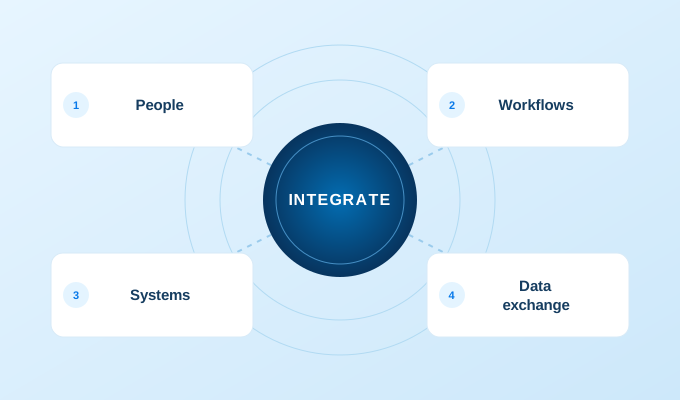
These connected elements help frame the work and the people it is intended to support.
Integration begins with a shared understanding of how information moves between people, processes, and systems. Advisory work can reveal gaps and guide future decisions.
Identify systems, users, data sources, interfaces, and business requirements.
Document current workflows and dependencies, including handoffs and data quality issues.
Compare architecture and interoperability options against mission needs and constraints.
Recommend a future-state roadmap, sequencing, and measures for assessing progress.
Activities are shaped around the mission, the available evidence, and the needs of the people doing the work.
Current-state diagrams, requirements, alternatives analyses, interface inventories, and transition roadmaps.
Architecture and integration advisory work makes dependencies visible and helps teams evaluate how existing tools and data flows can better support their mission.
Interview stakeholders, map current-state processes, and identify the information needed at each handoff. Translate findings into clear business and functional requirements.
Inventory data sources, exchange points, formats, and system dependencies. Assess where inconsistent terminology, manual transfers, or unclear ownership create friction.
Compare feasible approaches against mission needs, constraints, security, and applicable standards. Describe dependencies, sequencing, and questions that need further validation.
For a scientific review workflow, a team could map how data is received, validated, stored, and made available to reviewers, then identify gaps and recommend a practical future-state approach.