Understand the mission
Engage the people closest to the work, document current processes, and define the decisions or services the effort should support.

Bring practical scientific, data, and technology perspectives to public organizations serving communities.
We bring a thoughtful, multidisciplinary approach to the needs of public-sector teams and the people they serve.
Understand stakeholder needs, existing processes, and desired outcomes.
Improve the quality, interpretation, and communication of information.
Advise on workflows and information exchange across teams and systems.
Support clear documentation, training, and knowledge transfer.
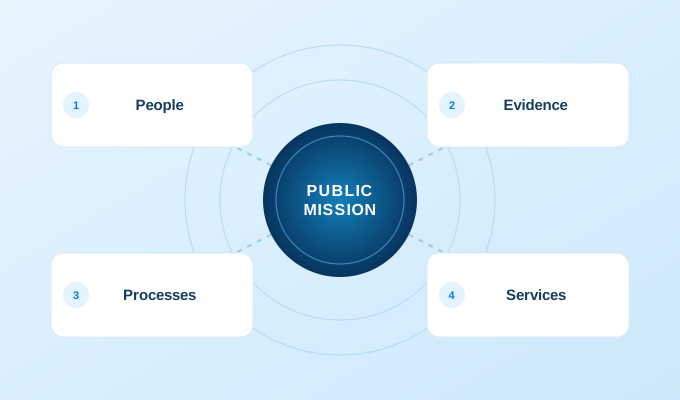
These connected elements help frame the work and the people it is intended to support.
Public-sector initiatives benefit from a clear understanding of the mission, practical analysis, and solutions that account for the people who use them.
Engage stakeholders and define the problem in operational terms.
Map processes, information, constraints, and opportunities for improvement.
Develop and compare feasible, evidence-informed approaches.
Support documentation, learning, and knowledge transfer.
Activities are shaped around the mission, the available evidence, and the needs of the people doing the work.
Stakeholder maps, process diagrams, requirements, analytical summaries, and training materials.
Public organizations face diverse challenges, but their work often depends on the same foundations: clear objectives, trustworthy information, accessible tools, and collaboration.
Engage the people closest to the work, document current processes, and define the decisions or services the effort should support.
Assess available information, identify quality and accessibility issues, and develop analyses that make findings and limitations understandable.
Prepare documentation, knowledge resources, and training materials that help teams adopt processes and retain expertise through change.
A program team could map an existing information workflow, identify where handoffs cause delays, and use those findings to prioritize improvements and training.