Evidence preparation
Organize submissions, literature, study data, and supporting documentation so reviewers can navigate a complex body of material. Track sources and document how information is prepared.

Support the people, information, and processes involved in evaluating complex scientific and regulatory materials.
We bring a thoughtful, multidisciplinary approach to the needs of public-sector teams and the people they serve.
Help organize evidence, respond to analytical needs, and make information easier for reviewers to use.
Support technical writing, literature synthesis, and the preparation of clear, review-ready materials.
Improve the organization, retrieval, and reuse of review artifacts and supporting knowledge.
Develop practical guidance and learning materials that help staff use tools, data, and processes.
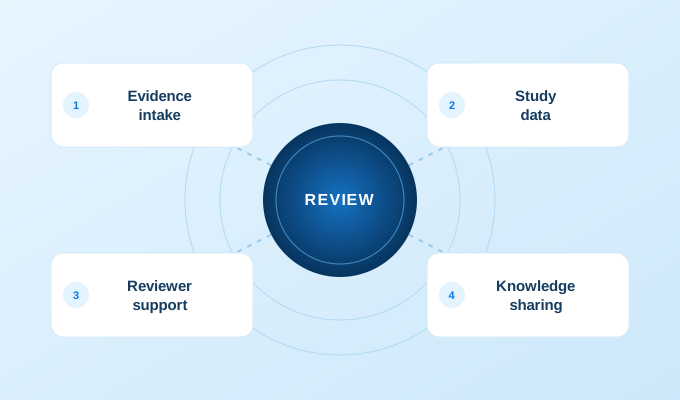
These connected elements help frame the work and the people it is intended to support.
Scientific review depends on organized evidence, accessible tools, and clear communication among specialists. Support can be tailored to the specific question and review environment.
Clarify the review question, relevant materials, timelines, and stakeholders.
Catalog evidence and make supporting data, references, and records easier to find.
Support literature review, data exploration, technical writing, and reviewer questions.
Prepare clear, traceable materials and capture knowledge for future use.
Activities are shaped around the mission, the available evidence, and the needs of the people doing the work.
Evidence inventories, review summaries, user guides, training materials, and documented support requests.
Review teams rely on accessible evidence, repeatable methods, and timely technical support. The specific mix of services can be aligned to the review stage and the needs of scientific staff.
Organize submissions, literature, study data, and supporting documentation so reviewers can navigate a complex body of material. Track sources and document how information is prepared.
Help clarify a reviewer’s question, identify suitable data, and coordinate statistical programming, visualization, or data curation support. Capture assumptions and limitations alongside the results.
Develop reference guides, maintain structured knowledge resources, and support training on established tools and processes. Feedback from users can inform improvements to materials and services.
When a reviewer needs to compare findings across studies, support could include understanding the question, organizing available datasets, documenting differences in terminology, and preparing analysis outputs for expert interpretation.
A structured intelligence approach helps teams find relevant sources, understand their context, and make information easier to use in scientific and regulatory review.
Define the question and identify relevant guidance, scientific literature, and other sources. Record publication details and scope so information can be checked and refreshed.
Organize material by topic, date, or source and identify themes, differences, and open questions while preserving the context of the original evidence.
Prepare source-linked briefs, inventories, and comparative matrices for specialist review and continued use.